South
Lou Shenyi , Liu Weijian , Sun Xun , Tong Biao , Wu Junyong , Wu Xihuang , Wang Zhibo
2018.03.18-2018.05.18

South installation view, 2025
South
Lou Shenyi , Liu Weijian , Sun Xun , Tong Biao , Wu Junyong , Wu Xihuang , Wang Zhibo
2018.03.18-2018.05.18
In ancient Greek times, the term 'symposium' was formed. It refers to the reunion of people who are related through the same profession or vocation, and it takes place in a festive environment. In Plato's symposium, the philosopher depicts a friendly contest of extemporaneous speeches delivered by a group of notable men attending a banquet. The exchange of ideas and experiences strengthens their solidarity and enables a wider understanding of different mentalities.
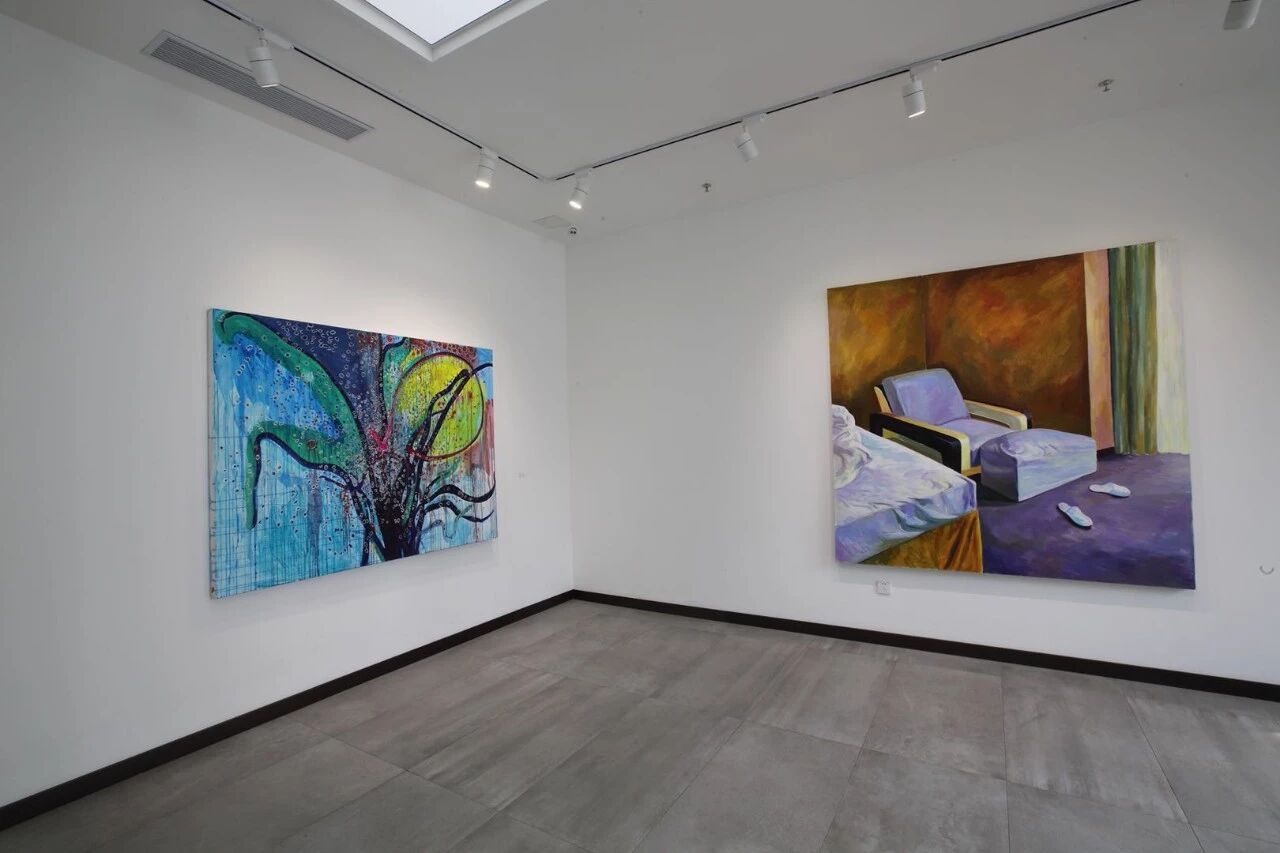
In March 2018, an exhibition titled ‘South’ will introduce seven artists, all having received their education at the Hangzhou Art Academy. Coming from different directions, these artists will travel up north to Shenyang to showcase their recent works in an exhibition and to gather in the sense of the ancient Greek symposium. However, different from Plato’s symposium, where philosophers such as Socrates, Aristophanes and Alcibiades convened, contemporary Chinese artists will gather together in Shenyang. Also, while the speeches in Plato’s symposium were to be given in praise of Eros, who is both the God of love and desire and the son of Aphrodite, the subject during the ‘South’ exhibition will be the course of development that every artist took after the intense years in Hangzhou. Today, each of the seven artists has gained international reception through his or her work and career, having processed a personal language. In the days leading up to the opening in Shenyang, experiences will be exchanged among the artists, as well as in the form of public talks, all centring around the presentation of their recent oeuvre.
This project has been initiated by Zhang Wuyun to bring his teachers and colleagues from the times of education in Hangzhou to his hometown. All seven artists are showing their work for the first time in Shenyang. They are bringing a high concentration of working skills and mentality from ‘South’ to the meeting with their colleagues and the public in Shenyang.
One work in the exhibition by Liu Weijian depicts a scene in a room with one side of a bed on the left, and a small table with a telephone on it. Different from Liu Weijian’s hotel room, where it is obvious that nothing has happened in a long time, the situation of the seven protagonists in this exhibition changed tremendously since they left Hangzhou to start their own studios. The ‘South’ exhibition should provide a snapshot from today’s situation of it.
While Liu Weijian constantly refuses to allow anything to happen in his paintings by focussing on colours and non-moving stills of random situations, Wang Zhibo, the only female painter in this show, creates special situations which she charges with many different meanings. Her language is full of codes and contextualized forms of painting, and the objects that she sets into her works automatically become personalized, or we refer to them as elements that have been charged with a complex meaning.
Considering their technical approach, the two painters are coming from the same direction, yet they are guiding our attention into completely different directions: Wang Zhibo presents different situations that ask to be interpreted, and Liu Weijian leaves the viewer alone, often with some pieces of furniture that might be related to any kind of memory. In a large-scale work containing six parts of different views of the sky, Liu Weijian sets some points of recognition for the viewer through possible references to works of old masters. However, by doing this, it remains unclear whether the work is a pure and passionate reference to his argument with painting.
Lou Shenyi creates his own surreal view of reality, devoted to the research of a definition of beauty. The influence in his work seems to be alternately originating from the extended phenomena of our minds—for example, while working under a state of meditation—or from total control. The three works in the exhibition demonstrate a density of forms and strong colours, just as vibrating notations of a beautiful, intense sound.
Similar to Lou Shenyi, who has been working in the most multifaceted way during the past years, Tong Biao reached a state of implementing brilliant, masterful mountain sceneries. These works, which are done on paper, could equally be read as being film stills of a moving landscape or light boxes with sharp reflections, waterfalls and winds going through the scenery. Their clarity is simultaneously fascinating and hypnotizing to the viewer. Tong Biao limited them on the phenomena of their nature and did not make any unnecessary brush strokes.
Wu Junyong seems to be declaring the world as his own, integrating various media into his repertoire. In this exhibition, he has one impressive drawing that refers to an engraving by Antonio del Pollaiuolo, with the same title: ‘Battle of Nudes’. Wu’s reference to the Florentine artist from the 15th century brings the Italian Renaissance into a Chinese context. Wu Junyong reinforces the poses of men in battle in different strained and athletic positions, as he is illustrating his figures in the same exaggerated plasticity as Pollaiuolo, who was originally a sculptor. With the result of high impact to the viewer, Wu realised his work in the size of 167 x 261 centimetres, while the original engraving is 42,4 x 60,9 centimetres.
Wu Xihuang’s name came up in different exhibitions during recent years as a painter who never commits to a certain subject. Similar to Liu Weijian, he discovered different situations in his work, but contrarily to his colleague, Wu Xihuang always left some aspect of interpretation to the viewer. This does not make his paintings to judging ones, informing the viewer about right or wrong, but they do have a moment of a certain indication of how the situation might have been.

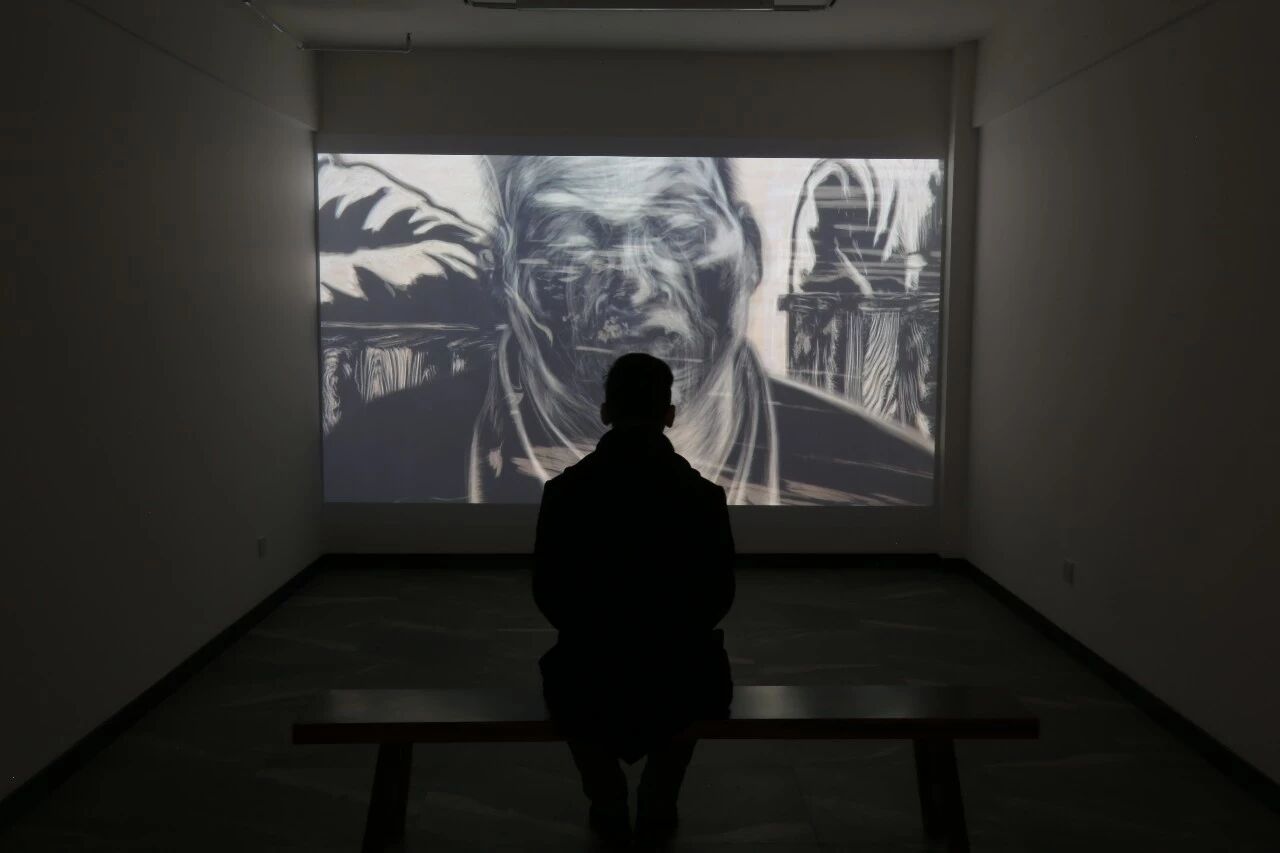
Sun Xun developed his entire universe out of the ambition to create animated movies, which he already started making in Hangzhou. Similar to a red circle of circumstances, his works are all related to each other, even though they present different projects and stages of his development. To the artist, the act of drawing may be considered to be some sort of automatism, just as breathing and the twinkling of the eyes are automatic for all humans.
In any case, drawing is the point of origin for every process of work for the 1980 born artist. In Shenyang, Sun Xun shows printing plates originating from one of his recent movie projects, which he realized as a 3D animated movie: a whole film cut out of wooden blocks.
During the age of studying, our capacity for learning is wide open, while we are driven by a hunger for information. The song title by the Black Keys, ‘She's Long Gone’, refers to a feeling about long gone adolescence, when personal and professional experiences were engraved into our memories. Some of these early experiences remain in our consciousness, building our backbone of future understanding.
Judging from the selection of artists in ‘South’, Hangzhou was a unique place in which to form the base of a critical viewpoint, from which everyone developed his or her specific language.
All images are installation views of South at WU SPACE, 2018. Courtesy of the artist and WU SPACE. All rights reserved.